









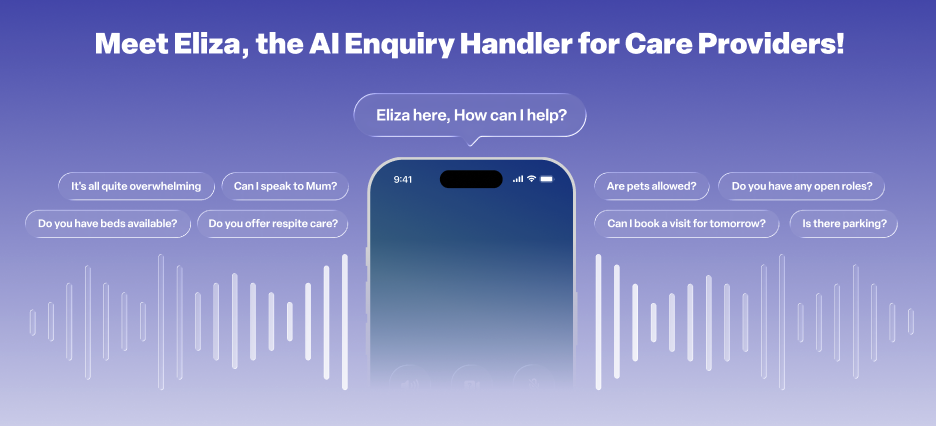
The care sector has a problem with missed calls. And it’s costing families more than they realise.
Every day, families across the UK pick up the phone to make one of the hardest calls of their lives.
They’re looking for care for a parent, a partner, or a grandparent. They’ve probably spent weeks building up to it. And in many cases, nobody answers.
Research shows that 37% of inbound calls to care homes go unanswered. More concerning is that 74% of those families never call back. That’s not a lead-generation problem; it’s a human one.
The gap between intent and connection
The care home enquiry journey is unlike almost any other. Families aren’t browsing for a product. They’re often in crisis, working against a hospital discharge deadline, or finally facing a conversation they’ve been avoiding for months. The window of intent is narrow, the emotional stakes are high, and the tolerance for friction is low.
When a call goes unanswered, it rarely gets a second chance. The family moves on. The care home never knows what they missed.
Care teams are stretched, front-of-house staff have competing priorities, and nobody is staffed to handle enquiries at 9pm on a Sunday. The problem isn’t willingness, it’s capacity.
Why generic AI doesn’t cut it
There’s no shortage of AI tools making their way into healthcare. But most weren’t built with care home operators in mind, and families can tell.
Enquiries into care homes involve questions about dementia care pathways, fee structures, home activities and whether a parent can bring their dog. They require empathy, patience, and context. A chatbot designed for GP bookings or hotel reservations doesn’t carry any of that.
The sector needed something built from the ground up, trained on real care conversations, and designed to handle the emotional weight of the moment.
Introducing Eliza
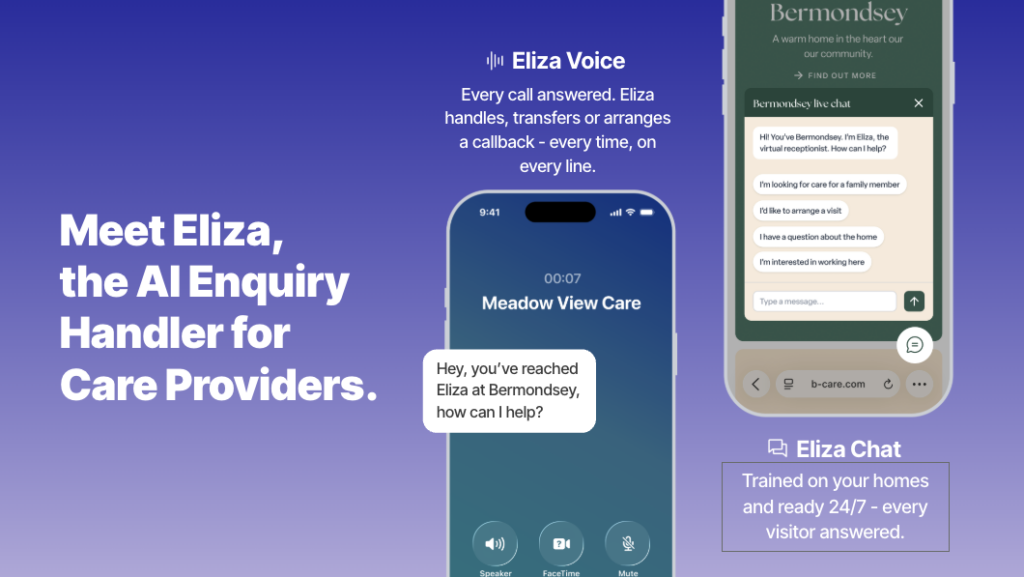
Eliza is Found by Lottie‘s AI-powered enquiry handler, built specifically for care providers. She answers every inbound call and live chat enquiry, qualifies leads, and helps arrange a home visit, around the clock, every day of the week.
By the time a care team member picks up the conversation, it’s already warm. The enquiry is profiled. The family has been heard.
Care providers remain fully in control, setting the timing for when Eliza picks up, how she introduces herself, and when to hand over to the team. She’s built on three principles we don’t compromise on:
- Steady Empathy – adapting tone to whoever is on the call
- Plain Speaking – clear, jargon-free communication that families actually understand
- Responsible Automation – always escalating when confidence drops, because trust matters more than throughput
The bigger picture
AI in care often gets framed as a cost-cutting exercise. We think that misses the point.
Done right, AI doesn’t replace the human touch in care. It protects it. It creates the conditions for care teams to spend their time on the conversations that need them, not the ones that happened at midnight when no one was there.
A missed call isn’t just a missed lead. For some families, it’s the moment they give up and settle for something that wasn’t quite right.
Eliza exists to make sure that doesn’t happen.