









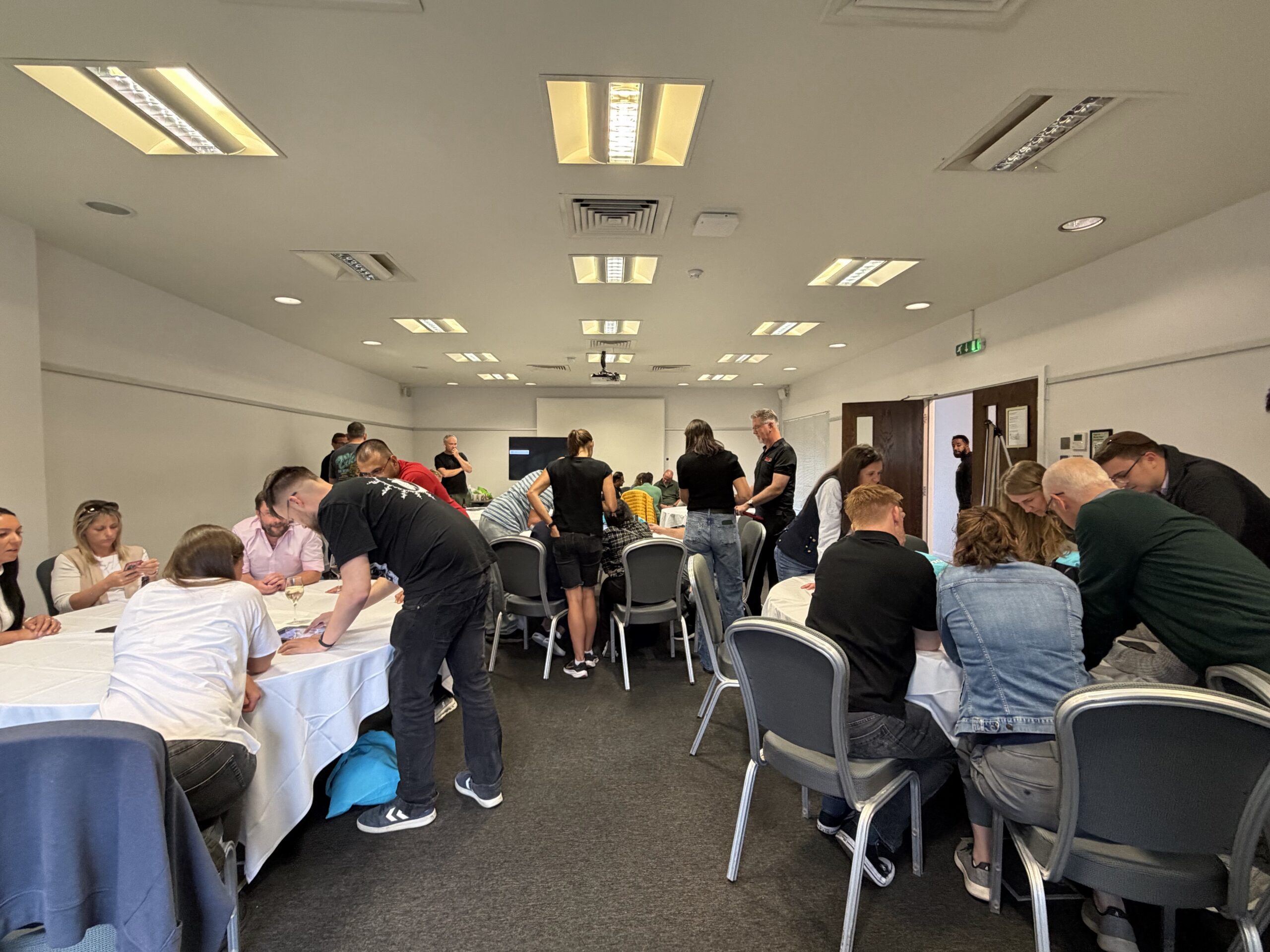
At Nourish we know the best results come from collaboration. That’s why we try to involve as many perspectives and areas of expertise as possible when building our solutions, and choosing our direction for the future. This ranges from co-producing functionality with people utilising care services to hosting departmental get togethers to explore and expand internal ideas. Our inaugral AI Lab is a prime example of the latter. Our goal was to use the AI Lab event as an examination of our AI-native culture. So we could celebrate participants internally, and better understand the varying opinions on AI application in digital care.
There were two key organisers of the event. Our Director of Data & AI Sudha Regmi, and our People & Culture Director Kate Crouch, shared their insight on the day in this blog.
Our first company wide Nourish AI Lab: Turns out it wasn’t really about the AI!
We both have a vested interest in AI, though we come at it from different angles. Sudha’s focus has been customer and product AI, Kate’s has been internal AI enablement. We’ve been working closely for a while now, bouncing ideas off each other and challenging each other’s thinking. Organising this Lab together was a natural extension of that. It wouldn’t have been the same event if only one of us had been driving it.
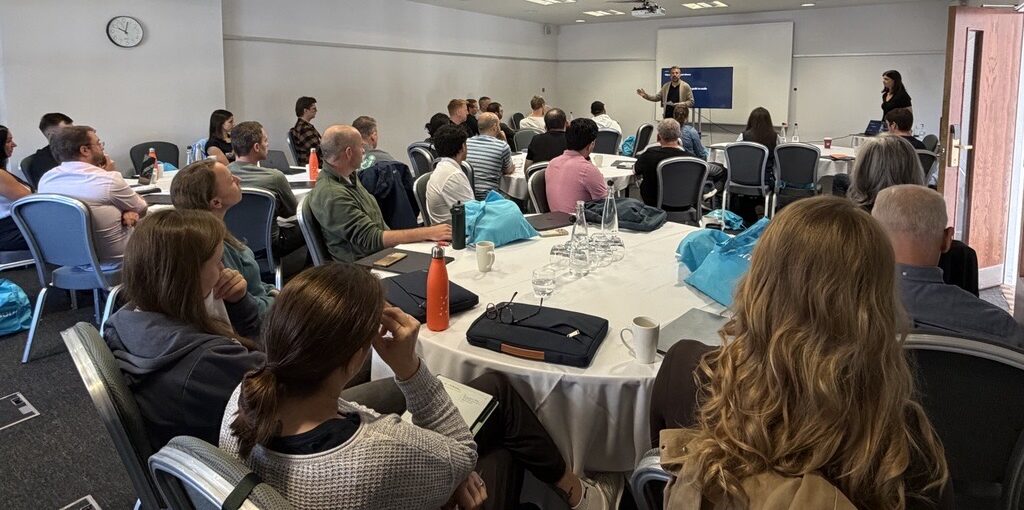
We set out with the intention to increase AI capability and fluency internally by having a cross functional team come together to build something real against an actual business problem.
Building something real with AI
What we got was two exciting, exhausting days. Passionate people got energised by understanding the problem, exploring what was possible, and dedicating time into building something real. There were late nights, plenty of coffee, lots of persistence, and a fair bit of figuring things out as we went.
Every single person who came to the event said they’re likely to keep building or experimenting with AI now the two days are over, and almost everyone thinks their idea deserves to go further.
Five cross functional teams, five real Nourish problems
The five key challenges we focused in on on the day were.
- Turning specialist clinical knowledge into deployable digital pathways
- Reimagining customer success plans
- Drafting tender responses
- Turning monthly win/loss data into useful insights for different teams
- Taking an ambiguous customer operational problem and turning it into a solvable brief
We aimed to stay away from hypothetical case studies and toy data dressed up as a challenge. Instead, we focused on real work that people in this business deal with every week.
What made it work wasn’t really the AI enablement (although having the AI Engineering team on hand was hugely appreciated!) It was the mix of people in the room. A colleague who spent years on surgical wards found herself on a team with product managers, user experience specialists and engineers. They told us it felt like a new kind of multi-disciplinary team! One with different expertise, but the same instinct to bring it all to bear on one problem.
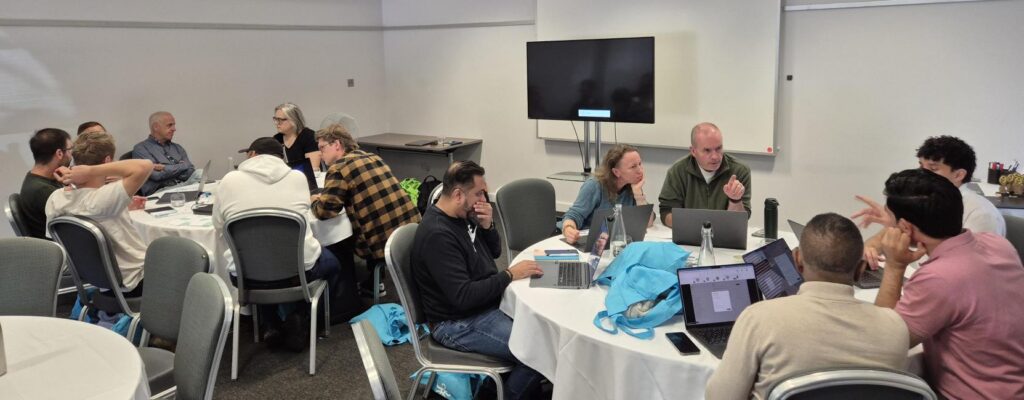
Developers got to sit closer to the decision-making than they normally do. Customer Success got to watch their world get solved for, instead of guessed at. As one of you put it afterwards: “What allowed it was focus. One problem, one goal, no meetings, co-location.” That mix and that focus, more than any model or tool, is what let teams go from a whiteboard sketch to something they could actually test in under two days. All while following our governance frameworks!
A key take away for social care technology from our AI Lab
That’s the thing we keep coming back to. So much of the conversation about AI is dominated by the latest model release. Or an abstract prediction about the future of work. What actually moves things forward is people who understand a problem picking up the tools already in front of them and building something useful, together.
It wasn’t seamless, it wasn’t meant to be even with less than 2 days to produce something, the demos went far beyond our expectations with some of them close to production ready. And this is key, this wasn’t meant as purely a learning exercise. We’ll be taking the strongest outputs forward and putting real resource behind turning them into things we actually use.
Thank you to everyone who put their name down, showed up, and built something in two days that didn’t exist before. We’re really proud of what came out of this one, and we’re looking forward to sharing where the ideas go next.